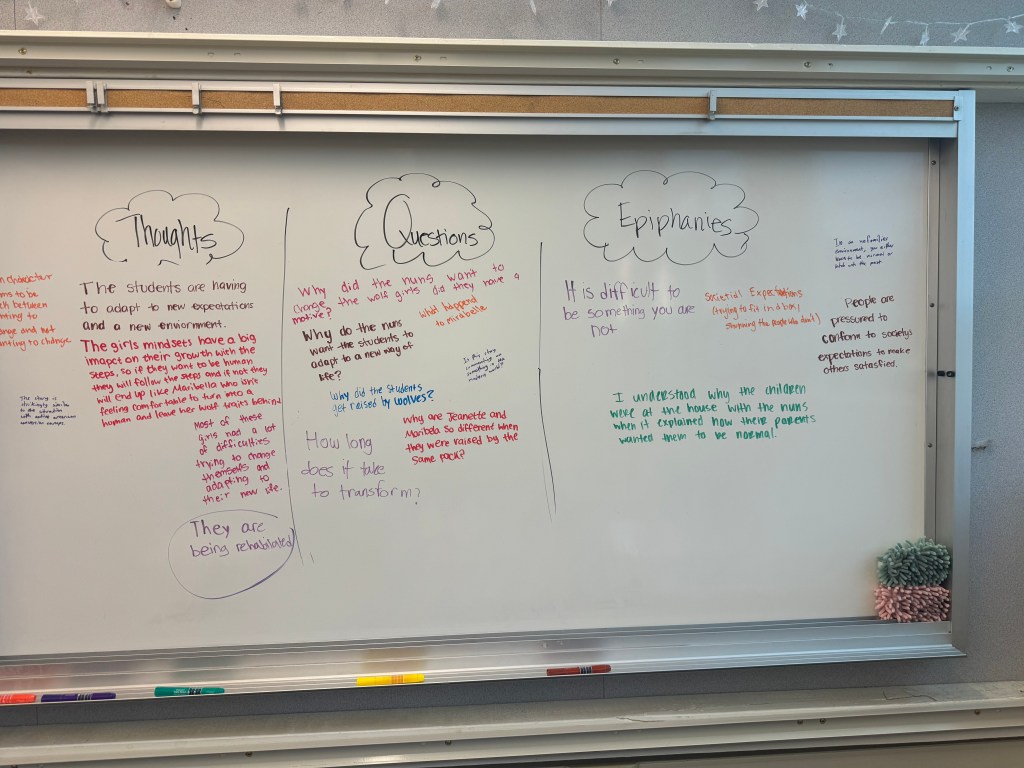
Students approach literary analysis at the beginning of the year by working through their thoughts, questions, and epiphanies about the text. “Thoughts” represent any of the surface level ideas students have as they read. For example, when reading The Great Gatsby students may have a “thought” about how Daisy seems to be a bit vapid or insincere.
Students might then move onto a “question” such as “what might Daisy’s character represent?” or even “why does Daisy let Tom treat her so poorly?”
As you can see from the board pictured above, “epiphanies” are more difficult for students. This is because “epiphanies” ask students to reach for a higher depth of knowledge and connect the text with outside ideas or experiences. For example, an epiphany about Daisy Buchanan might be that she represents a specific amoral character from the 1920s, and maybe the values of society as a whole during that time period.
I find this method prepares for some of the more nuanced analysis they will continue with throughout the year. It gets them talking about literature with out having to outright share their ideas with the class.

 Ali Michalak
Leave a comment